By Admin |
  September 21, 2026
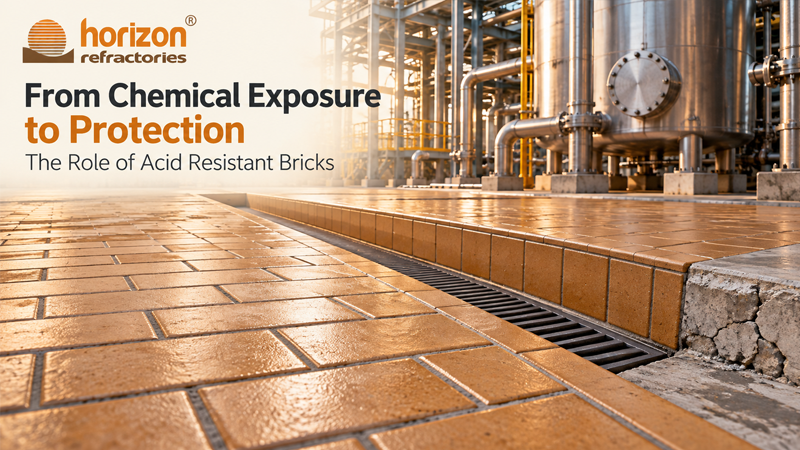
Chemical handling is a regular part of many industrial operations. Chemicals and acids come in contact with the floor, tank, drainage and walls during processing, storage or transport of materials. The normal surface may not be able to withstand such chemical exposure for a very long period of time; hence, damage occurs, and maintenance is very often needed.
A protective coating acts as a barrier between the surface and the chemicals. Acid-resistant bricks are generally used for such purposes in areas where chemical exposure is normal.
Acid resistant bricks are commonly used for this purpose in areas where chemical exposure is part of daily operations. Horizon Refractories supplies acid-resistant bricks and other lining materials for different industrial requirements.
Understanding Chemical Exposure in Industrial Areas
Chemical damage is not necessarily something that occurs immediately. When the surface is continuously exposed to aggressive chemicals, some minor changes can be gradually noticed. The surface becomes vulnerable, cracking and deteriorating, thus complicating the maintenance process.
This is especially important in chemical plants, storage areas and process sections where chemical contact is part of daily operations. A suitable lining can help separate the structural surface from the substances being handled.
For this reason, acid resistant brick manufacturers are an important part of industrial lining projects. The brick needs to match the conditions in which it will be used. Factors such as the type of chemical, concentration, temperature and duration of exposure can affect material selection.
How Acid Resistant Bricks Provide Protection
Acid-resistant bricks are constructed for areas where conventional bricks might not be sufficient when it comes to protection against chemicals. After installation, they form a protective layer over the base material.
Surface preparation, jointing material and installation quality also have an important role. A suitable combination of brick and mortar helps create a more complete protective lining.
Horizon Refractories offers acid-resistant bricks and tiles for applications across chemical and other industrial sectors. Its product range also includes acid-resistant mortar, which can be used along with brick and tile linings.
Common Applications of Acid Resistant Bricks
Acid-resistant bricks can be considered for different areas depending on the level and type of chemical exposure. Some common applications include:
- Chemical factory floors
- Chemical storage tanks
- Battery manufacturing units
- Galvanising plants
- Petrochemical facilities
- Chimney linings
- Cooling towers
- Chemical drains and process areas
The exact requirement can vary from one plant to another. A floor that experiences regular chemical spills may have different requirements from a tank that remains in continuous contact with a chemical solution.
Why Mortar Also Matters
The joints between bricks are an important part of an acid-resistant lining. If the jointing material is not compatible with the operating conditions, the lining may not provide the expected level of protection.
Acid-resistant mortar is used for bedding and joining bricks and tiles. Depending on the application, different mortar systems may be considered. The choice depends on factors such as the chemicals involved, operating conditions and the type of lining.
Using compatible materials throughout the lining helps avoid weak points between individual bricks. This is why the brick, mortar and installation method should be considered together rather than separately.
Selecting the Right Lining Material
Every chemical application has its own requirements. Before selecting an acid-resistant brick, the working conditions should be understood clearly. Chemical type, concentration, temperature, mechanical load and frequency of exposure can all influence the selection.
Experienced acid resistant brick manufacturers can help industries identify suitable products based on the application. Proper selection at the planning stage can also help reduce unnecessary repairs and replacement work later.
A well-planned lining is not only about protecting the visible surface. It also helps protect the structure below from regular chemical contact and supports smoother plant maintenance.
A Practical Way to Protect Industrial Surfaces
Chemical exposure is an essential aspect of many industries, but the support structure requires appropriate protection. Acid-proof bricks can be a good lining material in cases where chemicals, acids, bases and other hazardous materials are being handled.
Horizon Refractories manufactures various types of refractory materials and acid-resistant materials for industrial uses and operates in over 30 countries. The company manufactures acid proof bricks, acid proof mortars and other refractory materials.
Conclusion
Industrial surfaces exposed to chemicals need protection that suits their working conditions. Acid resistant bricks can help create a durable barrier between corrosive substances and the underlying structure. From chemical plant floors and tanks to drains and other process areas, the right brick, mortar and installation method can make a difference. For acid-resistant lining requirements, contact Horizon Refractories to discuss suitable products for the application.
Frequently Asked Questions (FAQs)
They are used to protect industrial surfaces exposed to acids, alkalis and other corrosive substances.
They are used in chemical plants, battery units, galvanizing plants, petrochemical facilities, cooling towers and other industrial areas.
Yes. Suitable mortar is used for bedding and joining acid-resistant bricks or tiles.